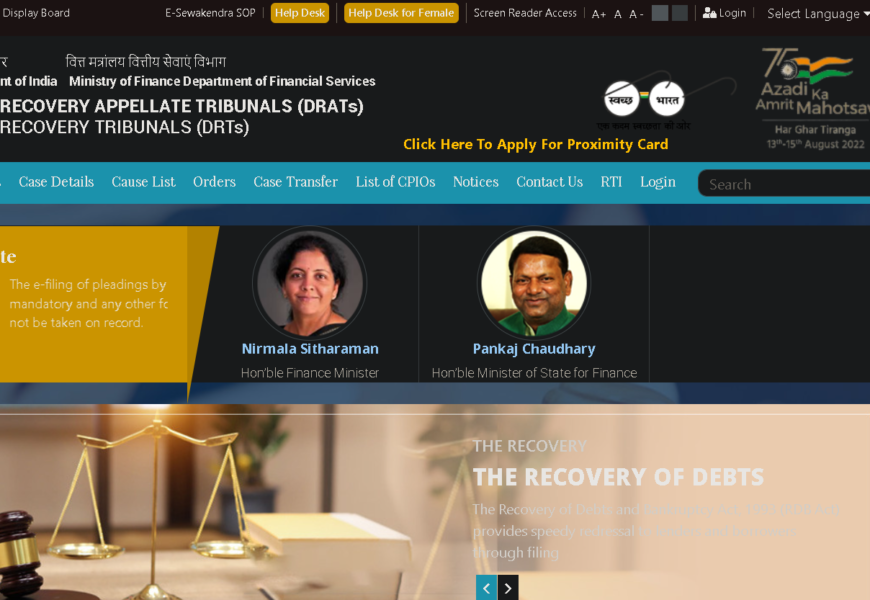
The website you provided, drt.gov.in, pertains to the Debt Recovery Tribunal (DRT) system in India. DRTs are quasi-judicial bodies established to facilitate the recovery of debts owed to banks and financial institutions. Here are some key points about DRTs:
1. Purpose
DRTs were created under the Recovery of Debts Due to Banks and Financial Institutions Act, 1993. Their primary role is to expedite the recovery process for banks and financial institutions against defaulters, ensuring that creditors can recover dues more efficiently.
2. Jurisdiction
DRTs handle cases where the debt exceeds a specified threshold (typically ₹10 lakhs) and can deal with various types of financial disputes, including loans and mortgages.
3. Structure
Each DRT is headed by a Presiding Officer, who is usually a retired District Judge or a senior judicial officer. The tribunals operate under the supervision of the Appellate Tribunal for Debt Recovery (DRAT).
4. Procedures
The process in a DRT is generally faster than in regular courts. The tribunals have the authority to:
- Summon parties.
- Conduct hearings.
- Issue recovery orders.
- Appoint receivers to manage properties if necessary.
5. Appeals
Decisions made by DRTs can be appealed to the DRAT, which serves as the appellate authority for disputes arising from DRT judgments.
6. Online Services
The DRT website provides various online services, including the filing of cases, checking case status, and accessing judgment records, which enhances transparency and accessibility for litigants.
7. Public Awareness
The site may also contain resources to educate the public about their rights and responsibilities concerning debts and the recovery process.