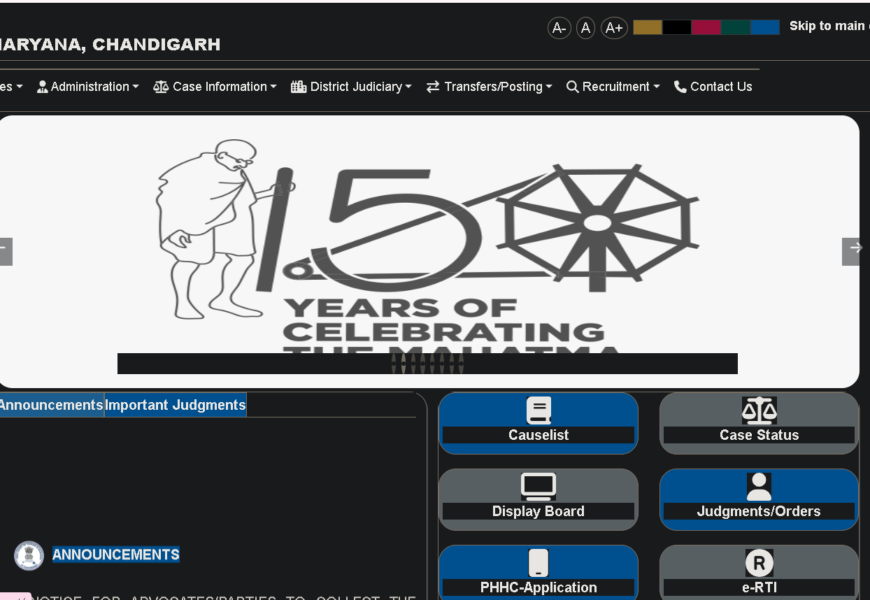
The link you provided directs to the official website of the Punjab and Haryana High Court, which is based in Chandigarh. This court serves as the highest judicial authority in the states of Punjab and Haryana and the Union Territory of Chandigarh. Here’s an overview of what you can typically find on this website:
- About the High Court: Information about the court’s history, structure, jurisdiction, and functions. This section provides insights into the role of the High Court within the judicial system and its importance in administering justice in the region.
- Judges and Administration: Details about the Chief Justice, other judges, and administrative staff. This includes profiles, roles, and sometimes contact information.
- Case Status: Tools or links for checking the status of ongoing cases, including updates on hearings, judgments, and orders.
- Court Rules and Procedures: Information on the procedural rules and regulations governing the court’s operations, including filing procedures, court schedules, and legal guidelines.
- Public Notices: Announcements and notifications regarding court operations, including changes in working hours, holidays, or important updates affecting the public.
- Judgments and Orders: Access to recent judgments, orders, and verdicts passed by the High Court. This is a valuable resource for legal professionals and the public to review judicial decisions.
- Online Services: Facilities for online case filing, payment of court fees, and other digital services to facilitate easier interaction with the court.
- Legal Resources: Information on legal aid, services available for the public, and resources for those seeking assistance or guidance.
- News and Events: Updates on events, seminars, workshops, and other activities organized by the High Court or related judicial bodies.
- Contact Information: Details on how to reach the court for inquiries, submissions, or other administrative purposes, including phone numbers, email addresses, and office locations.
The website is designed to enhance transparency, provide easy access to court services and information, and facilitate communication between the judiciary and the public.
Visited 8 times, 1 visit(s) today