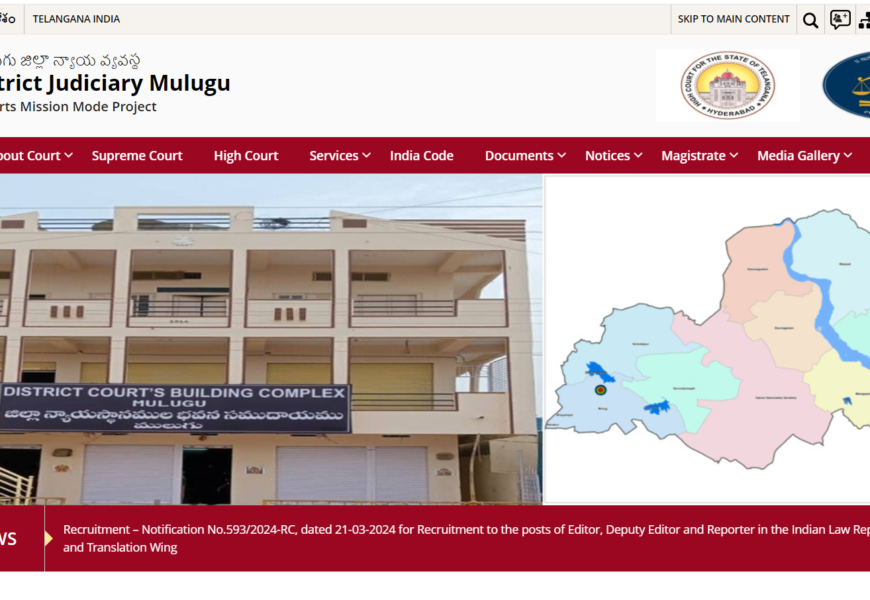
The official website of the Mulugu District Court provides an extensive array of judicial services tailored to the local community. This site is part of India’s eCourts initiative, which aims to make the judicial process more transparent, efficient, and accessible to the public. It contains essential information for citizens looking to interact with the court system.
The home page highlights various quick links such as case status, daily cause lists, and access to court orders. Users can search for case information by entering basic details, such as case type, year, and party name. This feature promotes efficiency by providing easy access to information about ongoing and closed cases without the need for in-person visits to the court.
One of the unique aspects of the site is its integration with the National Judicial Data Grid (NJDG), which offers real-time updates on case statuses and court proceedings. The NJDG integration reflects the Indian judiciary’s ongoing efforts to embrace technology and provide timely information to its citizens.
Additionally, the website offers resources for lawyers and legal professionals, including downloadable forms, court fee structures, and a list of judges. These features support the legal community by streamlining administrative processes.
For the general public, the website includes details about court holidays, important notifications, and contact information for various court offices. It also contains a section dedicated to legal aid services, providing information on how economically disadvantaged individuals can access free legal assistance.
In terms of layout and design, the Mulugu District Court website is simple and user-friendly. The site is designed to be accessible to a wide range of users, including those with limited technical knowledge. Moreover, it is available in both English and Telugu, ensuring that it meets the linguistic needs of the local population.
Overall, the Mulugu District Court website is an excellent example of how the Indian judiciary is using technology to improve access to justice and streamline court processes. Its focus on transparency, efficiency, and ease of use makes it a valuable resource for both legal professionals and the general public.